
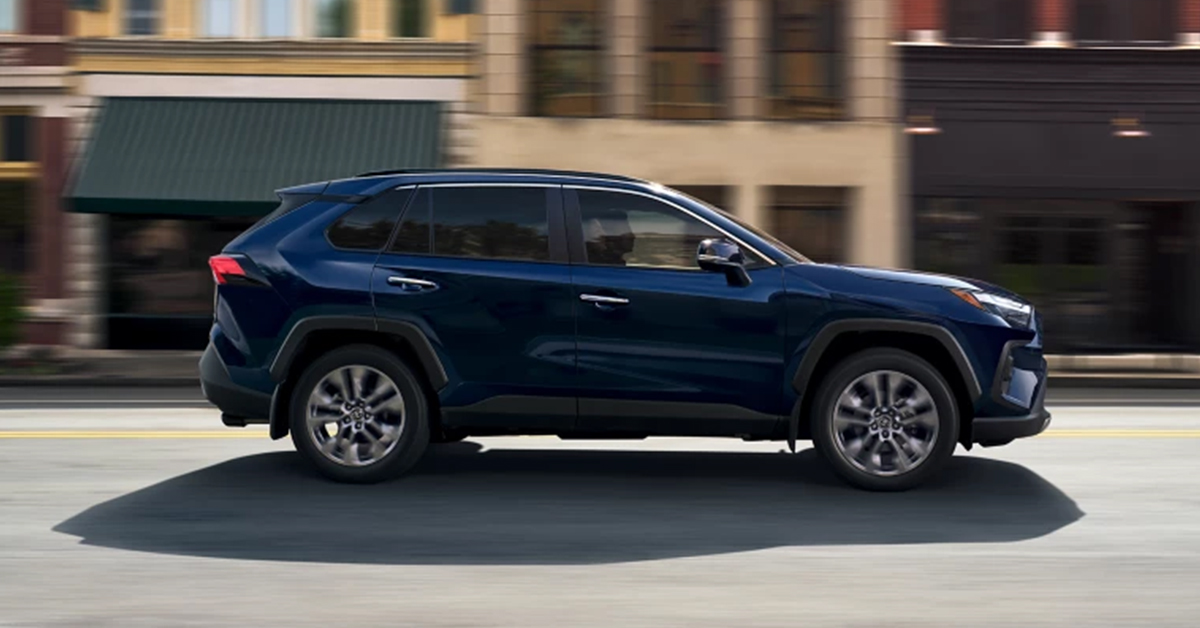
Ever wondered how your Toyota knows the speed limit before you do? With advanced features like Road Sign Assist (RSA), many 2025 Toyota models such as the Corolla, RAV4, and Tacoma can detect posted speed limits and alert you in real time. This technology uses a front-facing camera, vehicle software, and in some cases, GPS data to recognize road signs and display the current speed limit directly on your dashboard.
This article explains how Toyota’s speed limit recognition system works, what signs it can detect, and how it communicates that information to you. You’ll also learn how this feature works with Adaptive Cruise Control, which models include it, and when it might need your attention. Whether you're driving through the city or cruising on the highway, this guide will help you understand how your Toyota keeps you informed and in control.
If you're located in California, Arizona, Nevada, or Mexico, Wilson Automotive Group's network of 17 dealerships is ready to help. Contact or visit or your nearest location to experience these smart features for yourself.
How Toyota Vehicles Detect the Speed Limit
You may have asked yourself: how does Toyota know the speed limit? The answer is built into many newer models.
Most 2025 Toyota vehicles, like the Corolla, come with a feature called Road Sign Assist. It’s part of Toyota Safety Sense and helps drivers stay alert to posted limits.
Here’s how it works while you drive:
- A front-facing camera watches for road signs
- When it sees a speed limit, it sends that info to your car’s screen
- The speed limit then shows up behind your wheel, where it’s easy to see
You don’t need to press a button or do anything extra. The car reads signs on its own and updates as you go.
This is helpful when signs are hard to see—like at night, in rain, or in busy traffic. The feature works in many driving settings, from local streets to wide highways.
In a car like the Toyota Corolla, this adds a layer of ease without taking control from you. It’s one more way your car helps you stay within the law and focused on the road.
Technology Behind Toyota Speed Limit Recognition
The system behind your Toyota speed limit display uses more than just a camera. It relies on several tools that work together to read and understand signs on the road.
In models like the RAV4, this technology is trained to handle a range of real-world driving conditions. That includes signs that may be hard to see because of glare, rain, or poor lighting.
Core parts of the system include:
- Camera: Captures images of nearby road signs
- Recognition software: Identifies sign shapes, colors, and sizes
- In-dash display: Shows the current speed limit to the driver
- GPS data (in some models): Helps when signs are missing or blocked
The system does more than just detect signs. It also checks if the sign applies to your lane and direction of travel. For example, it may ignore signs for nearby exits or side streets.
If a speed limit sign is unclear or damaged, the vehicle may use saved map data instead. This gives you a helpful backup in areas where signs are missing.
The display updates quickly and often without you even noticing. This makes it easier to stay informed, even on roads you don't drive every day.
While it's not meant to replace your own judgment, this system adds another layer of support that drivers in vehicles like the RAV4 have come to trust.
Smart Integration with Adaptive Cruise Control
Many Toyota vehicles use speed limit sign recognition to support more than just alerts. It also works with features that make long drives easier.
One of those features is Adaptive Cruise Control. When paired with speed sign recognition, it gives drivers even more control over how they stay on pace.
In trucks like the Toyota Tacoma, this can be helpful on wide highways or rural roads. When the posted limit changes, the system lets you adjust your set speed with a quick tap.
Here’s how the two systems work together:
- The camera sees a new speed limit
- The sign is confirmed by the vehicle’s software
- The updated limit appears on your dash
- You can adjust your cruise speed with one button press
This setup helps reduce the need to slow down or speed up by hand. It also means fewer surprises when speed zones change.
Key benefits include:
- Easier highway travel
- Better flow in traffic
- Fewer speed changes by foot
This feature doesn’t take over your drive. You stay in charge. It’s just a smart way to help your Tacoma respond to the road without extra steps.
Which Toyota Models Offer Speed Limit Display Features?
Toyota has made speed limit display features widely available across much of its lineup. Many of today’s most popular models include this helpful tool.
If you’re shopping for a Toyota, there’s a good chance your next vehicle will come with this system built in. It’s now a standard part of Toyota Safety Sense in many trim levels.
Here are a few models where this feature is often included:
- Corolla: Great for city drives or daily commutes
- RAV4: Ideal for families, with extra safety tools included
- Tacoma: A smart fit for long trips, work routes, and open roads
In most cases, the system is active as soon as you start the car. There’s no extra setup. All you need to do is drive.
Here’s a quick look at how availability compares across key models:
| Model | Speed Limit Display Available |
| Camry | Yes |
| Camry Hybrid | Yes |
| Highlander | Yes |
| Highlander Hybrid | Yes |
| Corolla | Yes |
| Corolla Hybrid | Yes |
| RAV4 | Yes |
| RAV4 Hybrid | Yes |
| Prius | Yes |
| Tundra | Yes |
| Tacoma | Yes |
| Sienna | Yes |
| Sequoia | Yes |
| Land Cruiser | Yes |
| 4Runner | Yes |
Some trims may also include GPS support for added sign coverage. This helps when signs are missing or hard to see.
If you’re unsure which trim is the best fit, visit your nearest Toyota dealership for help. A team member can walk you through the available features on each model and help you choose the one that fits your needs best.
Limitations and Dealer Support
While Toyota’s speed limit system works well in many settings, it’s not perfect. Like any tech, it has limits.
The system may not catch every sign. In rare cases, it may show the wrong speed or miss one altogether. Weather, lighting, or faded signs can all affect how well it reads the road.
Here are a few things that may cause problems:
- Signs blocked by trees or trucks
- Signs that are bent, tilted, or hard to see
- Poor lighting or glare from the sun
- Dirty or damaged camera lens
In the Corolla and other models, the system is built to filter out bad data. Still, it’s a good idea to stay alert and not rely only on the display. The system is there to help, not to take over.
If something doesn’t seem right or the display stops working, help is close by. Your local Toyota dealer can:
- Check the camera for dirt or damage
- Run a system test and software update
- Explain how the system works in your trim
For questions or help with your vehicle’s speed limit display, visit the Toyota service team nearest you. They can make sure your system is working the way it should and help with any updates or repairs you may need.
Experience Speed Limit Recognition Firsthand
The best way to understand how this system works is to try it for yourself. Seeing the speed limit display in action helps you get a real feel for how it supports your drive.
A quick test drive can show you how it responds to signs, changes in speed zones, and road shifts. In trucks like the Tacoma, this can be a useful tool for highway travel and long hauls.
When you visit your local Toyota dealership, you can:
- Take a vehicle out for a test drive
- See how the speed limit feature works in real time
- Learn which trims include it and how to turn it on or off
Staff members can also answer your questions and explain how this feature pairs with other safety tools. You’ll see how fast the display updates, how clear it looks, and how it helps during everyday driving.
If you're thinking about a Toyota with more safety tech, this is a great place to start. Visit a nearby dealer and ask to see how the speed limit display works in a model like the Tacoma. It's a simple way to learn more and drive with added peace of mind.
Drivers often have questions about how their Toyota reads speed signs or tracks speed. Whether you're new to these features or looking to understand how they work behind the scenes, the answers below can help clear things up.
How does a Toyota car know the speed limit?
A Toyota car knows the speed limit using Road Sign Assist, which uses a front-facing camera to detect and display posted speed signs.
Does Toyota track your speed?
Toyota vehicles monitor your speed to support safety features, but they do not store or share that data unless you’ve opted into connected services like Safety Connect or Drive Connect.
How does a Toyota speed sensor work?
A Toyota speed sensor measures wheel or transmission rotation and sends that data to the vehicle’s systems to calculate speed.
Where is the speed sensor located on a Toyota?
The speed sensor is usually mounted on the transmission, near the output shaft. Its exact location may vary by model.
If you still have questions or would like help checking your system, visit your nearest Toyota dealership for expert support.
Explore More with Wilson Automotive Group
If you’d like to learn more about how your Toyota helps you follow the speed limit, Wilson Automotive Group is here to help. We proudly serve drivers from Prescott, Arizona, South Coast, California, Las Vegas, Nevada, and Claremont, California.
Visit us to explore our wide selection of vehicles, including the Corolla, RAV4, and Tacoma. Our team is happy to answer your questions and help you find the right model and features for your needs.
Looking for more tips on Toyota care and comparisons? Learn how often to change your transmission fluid, get answers about when to add AC refrigerant, or see a full comparison between the RAV4 and Honda CR-V.
Contact us or stop by today. We're here to make your Toyota experience simple and stress-free.
Disclaimer: All information is provided for general informational and entertainment purposes only. While we strive for accuracy, we cannot guarantee that all content is complete, current, or error-free. Any reliance you place on such information is strictly at your own risk. This article may include opinions and is not endorsed by, or officially affiliated with, any vehicle manufacturer or brand. Always consult official sources – such as the vehicle’s owner’s manual, authorized dealerships, or certified professionals – for the most up-to-date and personalized information.